|
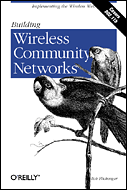
Building Wireless Community Networks is one of the most enjoyable technical books I've read in quite a while. The book just exudes geekiness, and makes its topic a lot of fun. By the closing pages if you're not chomping at the bit to go out and build your own 'cantenna,' well, you're probably just not a geek.
Weighing in at just over 100 pages this book makes for an easy read, but it's definitely not for folks without networking experience. The author himself is the sysadmin for the O'Reilly Network, and takes you at a brisk pace through the wonders of wireless networking, and community collaboration for collective cat-5-free network connections.
The first half of the book covers the basics of wireless networking and discusses topics such as basic topography, access points, wireless client configuration, and implementing common network services over radio frequencies. Good coverage of pertinent security topics is included as well. The author's sense of humor shines through the book in true O'Reilly fashion, fulfilling the mission to 'breathe new life into potentially dull topics.' Building Wireless Community Networks is anything but dull.
The second half of the book is where the geek factor really begins to come to light. The author discusses strategies for overcoming various topographical challenges, as well as antenna characteristics. The discussion on antenna types and which are best for different applications was very enlightening. If you a true geek, you'll certainly find yourself riveted to the author's discussion on building a Yagi antenna out of a Pringles can and a little bit of common hardware.
The author also discusses different applications of wireless technology, such as building a wireless gateway with Linux, as well as a 'catch-and-release' portal system allowing varying levels of wireless access to the public based on their identity and access privileges. The book closes with discussion of several prominent wireless community groups. One can't help reading the book without feeling a desire to get involved.
The only negative aspect to the book might be its lack of depth, but I find that's what makes it so readable. It's anecdotal, practical, and a lot of fun to read. If needed, O'Reilly does have a few other books on wireless topics that can probably fill any gaps left unexplored by this work.
In summary, this book was very enjoyable, and very readable. The author is engaging, and I'm itching to go and set up my own point-to-point wireless link between my house and, well, somewhere! (Work for me is less than a mile away as the 2.4Ghz RF waves fly...) If you're trying to set up your own wireless communty group or network, then Building Wireless Community Networks is a fantastic starting point.
Now if only O'Reilly published home repair, plumbing, and home electrical system guides!
Overall rating: 9.5/10
|